Queen’s University’s Roel Vertegaal says thinfilm phone will make current smartphone obsolete in 5 to 10 years.
KINGSTON, ONTARIO, May 8 2011 – The world’s first interactive paper computer is set to revolutionize the world of interactive computing.
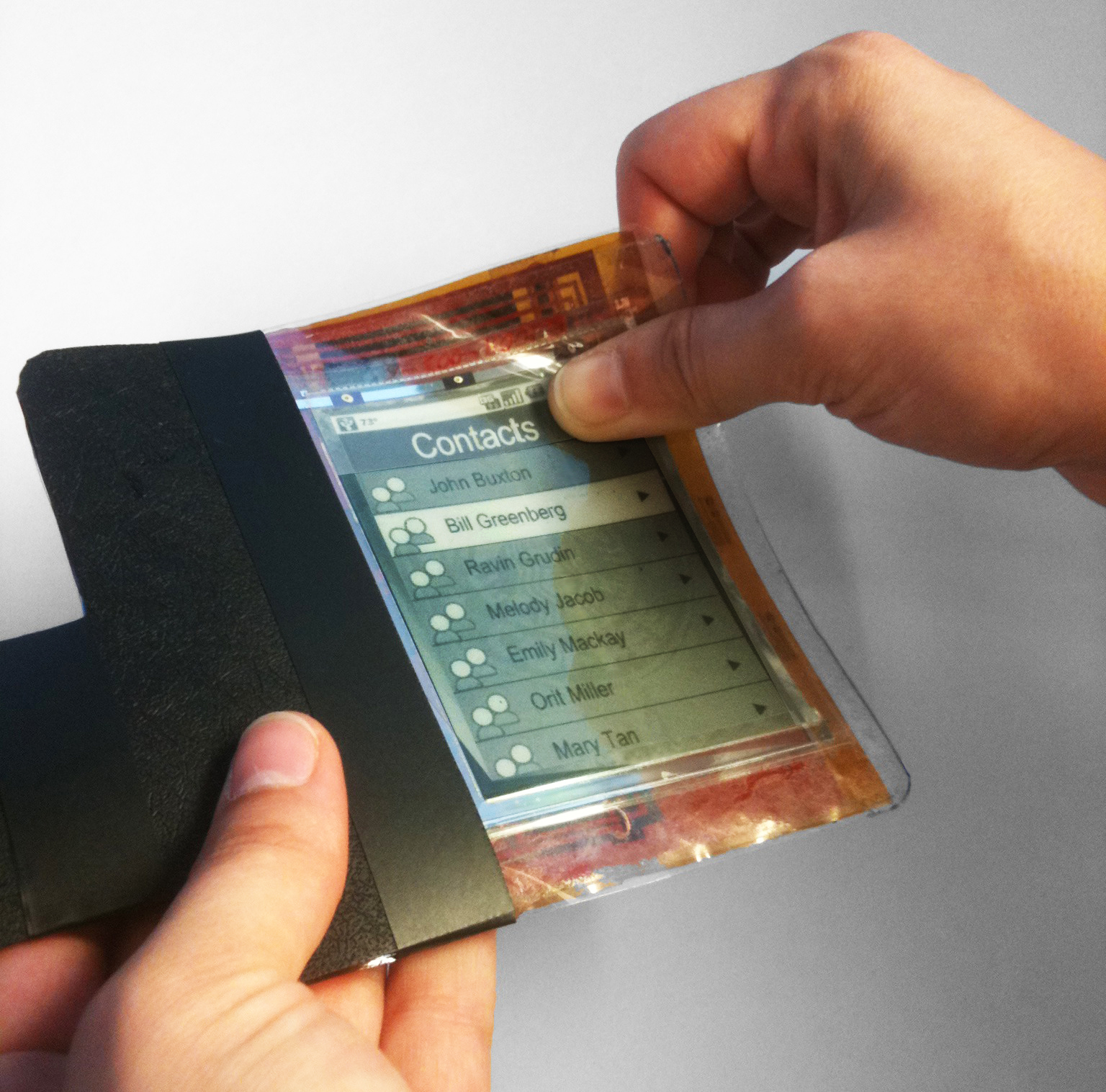
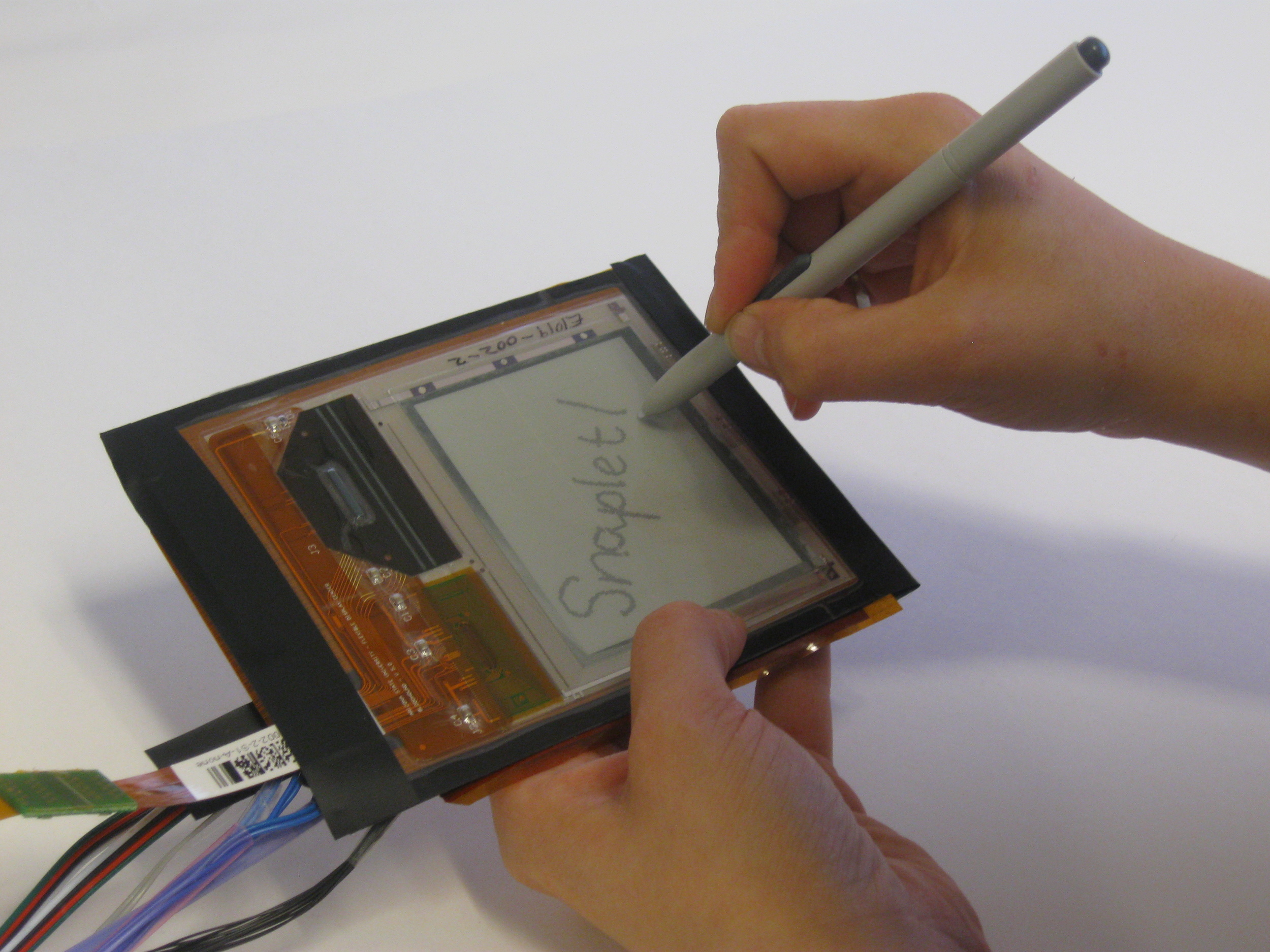
“This is the future. Everything is going to look and feel like this within five years,” says creator Roel Vertegaal, the director of Queen’s University Human Media Lab,. “This computer looks, feels and operates like a small sheet of interactive paper. You interact with it by bending it into a cell phone, flipping the corner to turn pages, or writing on it with a pen.”
The smartphone prototype, called PaperPhone is best described as a flexible iPhone – it does everything a smartphone does, like store books, play music or make phone calls. But its display consists of a 9.5 cm diagonal thin film flexible E Ink display. The flexible form of the display makes it much more portable that any current mobile computer: it will shape with your pocket.
Being able to store and interact with documents on larger versions of these light, flexible computers means offices will no longer require paper or printers.
“The paperless office is here. Everything can be stored digitally and you can place these computers on top of each other just like a stack of paper, or throw them around the desk” says Dr. Vertegaal.
The invention heralds a new generation of computers that are super lightweight, thin-film and flexible. They use no power when nobody is interacting with them. When users are reading, they don’t feel like they’re holding a sheet of glass or metal.
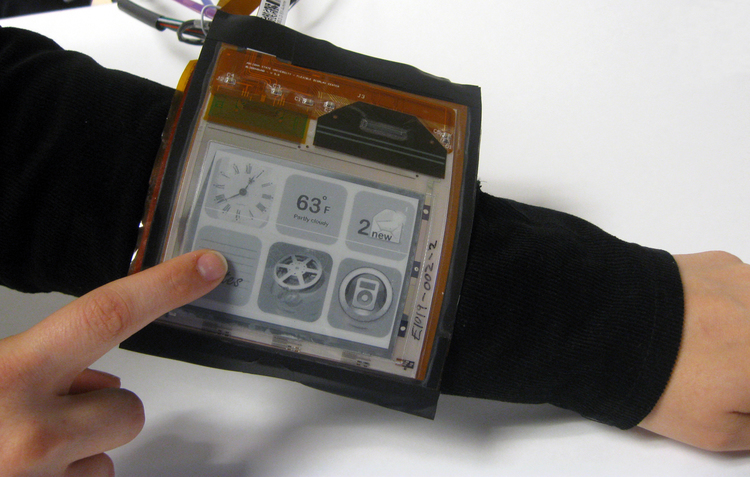
Dr. Vertegaal will unveil his paper computer on May 10 at 2 pm at the Association of Computing Machinery’s CHI 2011 (Computer Human Interaction) conference in Vancouver — the premier international conference of Human-Computer Interaction. An article on a study of interactive use of bending with flexible thinfilm computers is to be published at this conference, where the group is also demonstrating a thinfilm wristband computer called Snaplet.
The development team included researchers Byron Lahey and Win Burleson of the Motivational Environments Research Group at Arizona State University (ASU), Audrey Girouard and Aneesh Tarun from the Human Media Lab at Queen’s University, Jann Kaminski and Nick Colaneri, director of ASU’s Flexible Display Center, and Seth Bishop and Michael McCreary, the VP R&D of E Ink Corporation.
Video – PaperPhone demonstration
Video – Snaplet wristband computer
To arrange an interview or for a copy of the papers, please contact Michael Onesi at (613)533-6000 ext 77513 michael.onesi@queensu.ca, News and Media Services, Queen’s University.
References
Lahey, B., Girouard, A., Burleson, W. and R. Vertegaal. PaperPhone: Understanding the Use of Bend Gestures in Mobile Devices with Flexible Electronic Paper Displays. In Proceedings of ACM CHI’11 Conference on Human Factors in Computing Systems, ACM Press, 2011, pp. 1303-1312. [PDF]
High resolution stock photos can be downloaded by clicking the below thumbnail gallery.